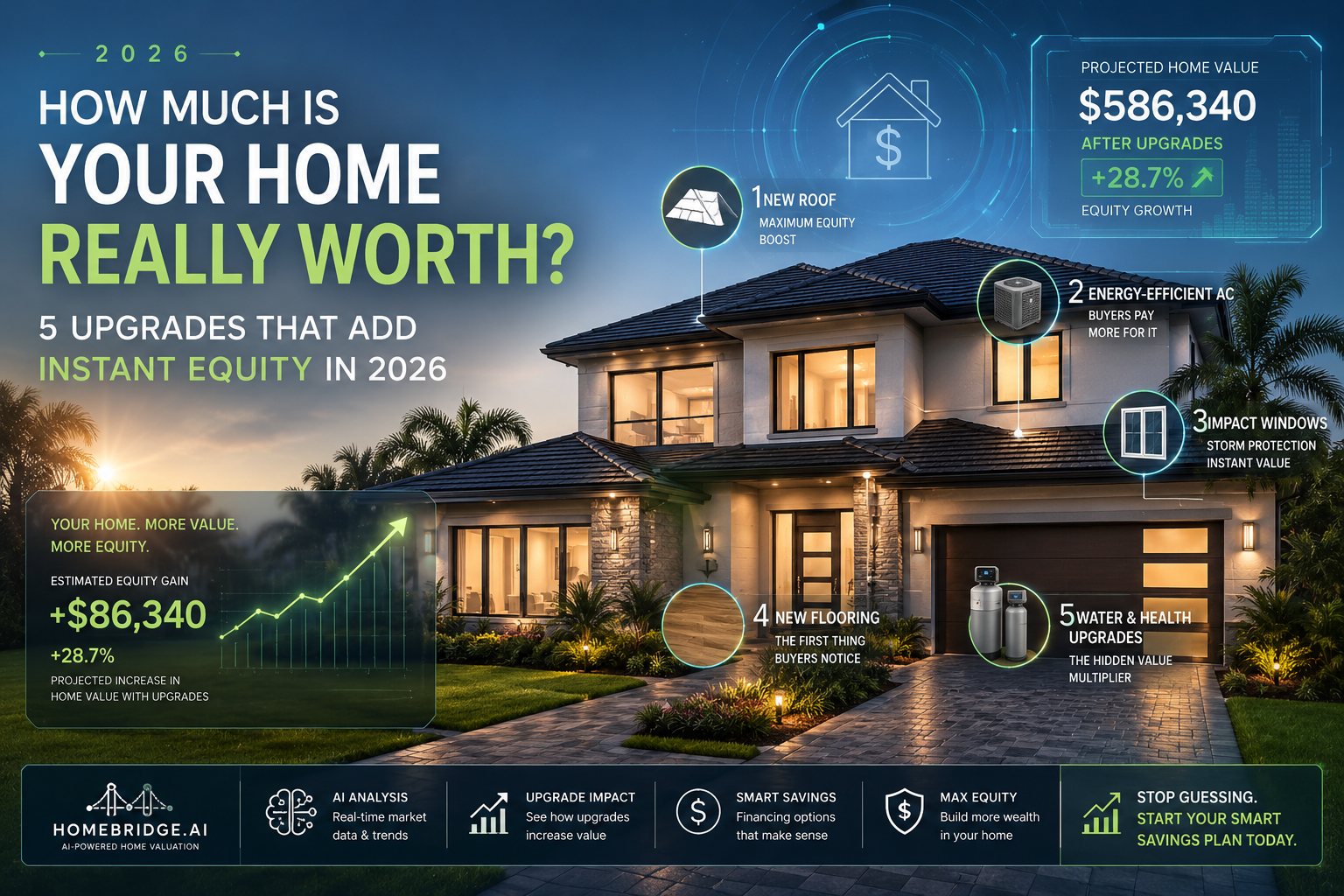
Discover how to leverage home equity financing for energy-efficient upgrades like central air, roofing, and impact windows. Learn about 2025–2026 loan options and government programs that maximize ROI.

Making Your Homes Value Work for You
In 2025–2026, home equity financing has become one of the smartest ways to fund major home upgrades — especially those that make your property more energy-efficient. Rising energy costs and strong sustainability incentives mean every dollar you invest can return savings in comfort, value, and monthly bills. From upgrading your central air to replacing windows or installing a high-performance roof, equity-based financing gives homeowners the flexibility to fund meaningful improvements without depleting savings. With Homebridge.ai, homeowners can forecast how upgrades will increase property value, improve energy efficiency, and reduce insurance premiums — all before committing to a loan.

Why Energy-Efficient Upgrades Are Perfect for Home Equity Financing
Not all projects justify borrowing — but energy-efficient upgrades are different. They can reduce monthly utility costs, qualify for tax credits, and boost home resale value simultaneously. According to the U.S. Department of Energy, improving energy efficiency can cut household energy bills by 10–30% each year — savings that can offset financing payments.

Top upgrades financed through home equity include:
- Energy-efficient central HVAC systems
- Impact-rated windows and doors
- Reflective or cool roofing systems
- Tankless hot water heaters
- Improved insulation and ventilation
How Home Equity Financing Works in 2025–2026

Home equity financing uses the value you have built in your property to fund upgrades. The two most popular types are:
- Home Equity Loan: Offers a fixed interest rate and lump-sum payout — ideal for large, one-time projects like new roofing or HVAC systems.
- Home Equity Line of Credit (HELOC): Works like a credit card with your home as collateral, giving flexible access to funds as you complete different phases of your upgrade.
- As of 2025, homeowners can typically borrow up to 85% of their homes appraised value, minus any existing mortgage balance. Rates are lower than personal loans, making this one of the most affordable ways to finance upgrades.
Pairing Equity Financing with Federal and State Programs
Combining home equity financing with government incentives can dramatically improve ROI.

Key programs include:
- HUD Title I Home Improvement Loans – Available for permanent property improvements.
- DOE Weatherization Assistance Program (WAP) – Grants for qualifying households to improve energy efficiency.
- Inflation Reduction Act (IRA) Credits – Through 2032, homeowners can claim up to 30% in federal tax credits on approved efficiency upgrades.
- Many states also provide rebates and low-interest loan programs for efficiency improvements. Leveraging both private and government funding reduces upfront costs and accelerates your return.
How to Calculate ROI Before Borrowing
Before tapping into home equity, its important to ensure the upgrades make financial sense. Here a simple ROI formula:
(Energy Savings + Tax Incentives + Home Value Increase) – Total Financing Cost = Net ROI
Use Homebridge.ai to model your ROI by:
- Estimating monthly energy savings from efficiency upgrades.
- Seeing how property value increases with each improvement.
- Factoring in insurance savings from upgrades like impact windows or roofs.
The Added Benefits: Insurance and Maintenance Savings
Energy-efficient upgrades often lower more than just utility costs. For instance:
- Impact windows can cut windstorm insurance premiums.
- Cool roofs reduce thermal stress and extend roof lifespan.
- New HVAC systems minimize breakdowns and costly repairs.
Conclusion: Smart Financing for a Smarter Home
Your homes value is more than equity — its opportunity. By using home equity financing to fund energy-efficient upgrades, homeowners can transform their properties into high-performing, sustainable investments. With insights from Homebridge.ai, you can identify which upgrades yield the greatest financial and energy returns — and use financing confidently to reach those goals. In 2025 and beyond, strategic equity borrowing is more than a funding method — its a roadmap to long-term comfort, savings, and property value growth. Ready to Maxi